Thinking Beyond Bread and Bottled Water
Disaster Preparedness
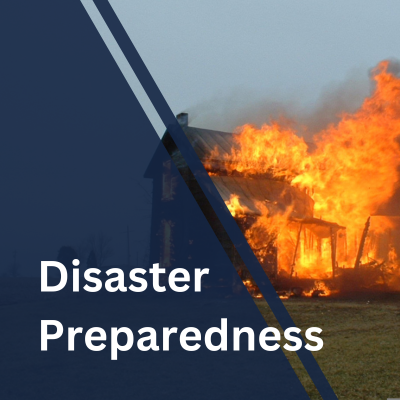
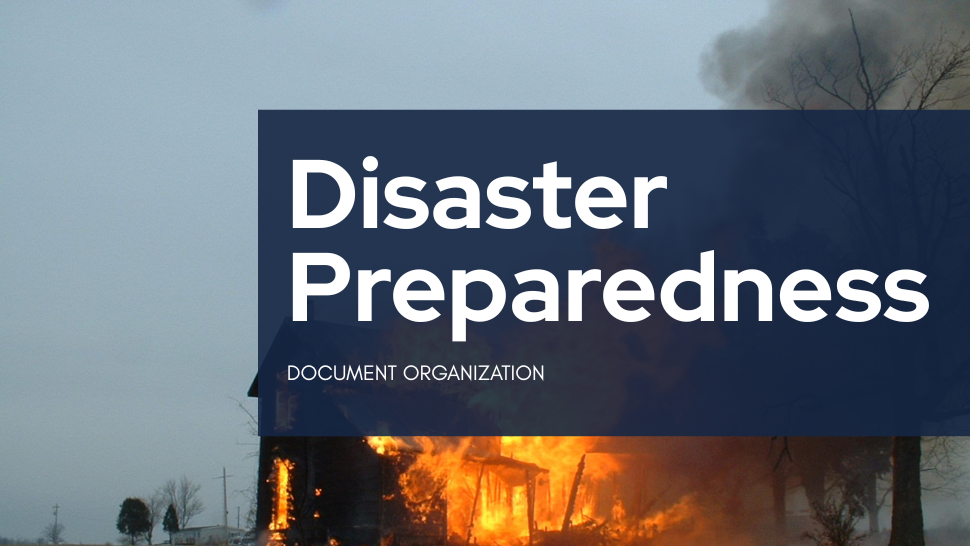
When you think of disasters, your mind may automatically go to global events, such as hurricanes, wildfires, and floods, and while the American Red Cross responds to about 65,000 disasters every year, or one every 8 minutes, the majority are house fires.
More than 350,000 house and residential building fires happen each year, 3,700 of which resulted in loss of life and caused more than 18 billion dollars in damages according to the U.S. Fire Administration’s 2022 statistics.
No matter the type of disaster, they can all cause damage to property, documentation, and potentially have fatal outcomes. Being prepared for disasters in the short and long-term includes not only things like checking smoke detectors and following evacuation orders, it also involves having your life’s documentation safely stored and easily accessible.
Types of Disasters That May Affect You
There are many types of disasters that everyone should prepare for, including floods, fires, and winter storms. But there are also natural disasters that may affect you based on your geographical location.
West coast: Likely to experience earthquakes, wildfires, hurricanes (hawaii), volcanoes, tsunami’s, landslides, and recently….tornados!
Western mountainous region: This area is at high risk for earthquakes, wildfires, and winter storms.
Midwest: There is a known risk for tornadoes, earthquakes, and wildfires.
South and southeast: Common natural disasters include tornadoes, earthquakes, hurricanes, and landslides.
Mid Atlantic and New England: The biggest risks are hurricanes and winter storms.
Knowing what types of disasters are most likely to affect you can help you effectively prepare. A disaster that’s isolated to only your family or household, such as a fire, requires you to have a plan for safely exiting, accounting for everyone, and contacting emergency services. A natural disaster may require you to know evacuation routes or in the instance of a hurricane or winter storm, plan ahead with food, beverages, and house prep to maintain structural integrity and protect valuable and personal possessions.
You can read more about preparing for disasters at the American Red Cross.
Keeping information secure digitally, with a service like Breadcrumb Digital, allows you to access the important documents and information you’ll need to provide as you piece together your belongings. In the event you tragically die, a safe space such as Breadcrumb Digital will make all of your documentation available to loved ones who you have identified.
What to do Immediately in Response to a Disaster
Immediately after a disaster, it’s important to stay calm (and wear sturdy shoes!). Here are some crucial steps to take:
Safety should always be your top priority.
- Assess your situation. Check yourself, your family, and anyone nearby for injuries. Administer first aid (if you’re trained to do so) and call for medical help if needed.
- Account for everyone. Verify all family members and pets are safe and accounted for. Check on neighbors, especially elderly or vulnerable persons, when possible.
- Avoid hazards. Things like exposed wires, broken glass, buildings with structural damage, and flooding can all be risks. If the disaster involves fire or gas, stay alert for lingering smoke or gas leaks and avoid turning on electrical switches.
- Secure utilities. Turn off gas, electricity, and water if you suspect damage or leaks and it is safe to do so.
- Follow emergency orders. If authorities have issued evacuation orders, stay out of the area until it has been deemed safe to return.
- Move to a safe location. If your home or surroundings are unsafe, look for shelter in a designated emergency location, with friends or family, or in an emergency shelter provided by relief organizations.
Keep informed so you have accurate information to make safe decisions after a disaster.
Stay connected. Make sure to notify loved ones that you’re safe. If phone lines are down, try texting or using social media platforms. Once you’ve let family or friends know you’re safe, avoid using your phone unless necessary. This helps to keep lines open for emergency services and preserves battery so you can remain connected.
Use reliable news sources. Don’t forget about emergency broadcasts that can be tuned into on battery-powered radios if your smartphone or TV is unavailable.
Monitor weather and safety alerts. Make sure to keep track of ongoing risks, such as the aftershocks of an earthquake or rising water levels from a flood.
How to Plan for Life (or Death) Post-Disaster
After a disaster, you’ll need to begin rebuilding your life. Home fires, floods, and other natural disasters can demolish documentation, electronics, and personal possessions. Keeping information secure digitally, with a service like Breadcrumb Digital, allows you to access the important documents and information you’ll need to provide as you piece together your belongings. In the event you tragically die, a safes pace such as Breadcrumb Digital will make all of your documentation available to loved ones who you have identified.
Documents You Need Access to:
In the aftermath of a disaster, you may lose access to critical documents that are essential for recovery. Knowing which documents are important and taking steps to store them securely can save time and stress during this difficult period.
Identification: A driver’s license, passports and social security cards are crucial. Not only are they required to prove your identify, they are required to access aid, deal with financial matters and rebuild your life after a disaster.
Insurance Policy: After any threats have passed and you’ve assessed damages, you’ll need your insurance information to start a claim. Knowing where insurance policies were held and having your policy details available will streamline the process. You will need your home or renters insurance policy, auto policy, health insurance, and depending on the circumstances any life insurance you may have.
Financial Records: In order to manage your finances and file for assistance, you may be required to provide bank statements, loan documents, credit card information, and property deeds.
Legal Documents: In the event of your death or should you be unable to make medical or financial decisions after a disaster, your family may need access to your wills, power of attorney, birth certificate, marriage certificate and any other legal contracts as they work through documentation, paperwork, and red tape.
Emergency Contacts: Having a list of family members, healthcare providers, and insurance agents handy ensures you can reach the right people when needed. Consider how many phone numbers you know off the top of your head should your phone be damaged. Or who are your healthcare providers should you need access to additional prescriptions or long-term care in the aftermath. And your insurance agent is obvious, they hold access the funds you need to manage life in the short and long term.
Safeguarding Documents That May Be Destroyed
Any of these vital documents you need to access in the event of a disaster can be gone in the blink of an eye. It’s easy for physical documents to be destroyed or misplaced during a disaster which can delay your recovery efforts. Having backups of essential documents can help you to access aid, file claims, and manage your finances more efficiently, giving you peace of mind and allowing you to focus on recovery.
Store physical copies of documents in a safe, durable container. Consider a fireproof safe and be sure to check its temperature ratings. Then create digital backups of files. Scan important documents and store them securely in an encrypted space, such as Breadcrumb Digital. Let a trusted family member or attorney know where and how to access.
What To Do If Documents Get Destroyed in a Disaster
If your documents do get destroyed in a disaster, you’ll have to start the process of replacing them. You need to prove your identification first, so start there.
Proving Identity. Your birth certificate is the only documentation that doesn’t require you to have a physical proof of identity, and request a new birth certificate through your State’s official website. This is usually the Department of Health or Office of Vital Statistics. In order to get a new birth certificate, you’ll need to answer a few questions about yourself such as your full name, location of birth, and mother’s maiden name.
Once you have your birth certificate, you can begin working on other identification documents.
- Social Security Card: Visit their website for a free replacement card, call them at 800-772-1213, or make an appointment or drop in to your local office.
- Driver’s License/State Identification: Each state has its own requirements which you can find through the bureau of motor vehicles, but typically you’ll need proof of identify (your birth certificate), proof of residence (download a utility bill or bank statement from an account you can access online), and you may need to know your social security number depending on your state.
Accessing Funds. You will be charged a fee to replace some of your documents, like your driver’s license. You can take cash when you go in person but when replacing anything online you’ll need a credit card. Sometimes you can “pay by check” and with some digging you can find your full account and routing number on your banking app if your credit card and check books were destroyed.
If everything is destroyed, you can access funds once you get your birth certificate. Most banks will accept a birth certificate + a secondary form of ID (bank statement, paystub, utility bill, etc.) to access funds in your account and get a replacement bank card.
In the meantime, contact your insurance company to open a claim. If you have an online account through your insurance broker, you can look up your policy numbers and policy details to expedite the process and can sometimes start a claim online. Begin replacing other important documents your family will eventually need such as any marriage certificates or divorce decrees, will, power of attorney, deeds, and more.
Dealing With Death After a Disaster
f you’re dealing with the death of a loved one as the result of a natural disaster you may need to enlist the help of local authorities and natural disaster relief organizations to gain access to necessary documents. If you are unable to obtain necessary documentation, you’ll work through it in probate court.
Death Certificate: Begin by obtaining a death certificate from the health department or coroner’s office where the death occurred. Death’s certificates are typically issued in less than two weeks after the death, though may be delayed after large scale natural disasters.
Will: Look for a will. If the contents of the home were destroyed, all is not lost. The will may be in a safe deposit box or with a lawyer. If you can’t find a will, the estate gets distributed based on your state’s intestate succession laws, meaning the order of succession the state has set. It’s typically surviving spouse, children, other relatives, and in cases where there are no surviving relatives, the estate goes to the state.
Financial Documents: Look for accounts that need to be frozen and closed or collected upon. Look for bank statements in documents or check their phone for banking apps or emails. Keep an eye out for investment accounts, insurance policies, titles, deeds, and outstanding debts. Call employers and determine if there was any employer sponsored retirement accounts, if health savings accounts were available to employees, if they offer a pension plan, and what brokerage is responsible for retirement accounts. It will take some digging, but find allies in those who knew the deceased beyond their typical friend and family circle.
Inventory and Appraise: If property was lost or damaged in the disaster, you’ll need to determine who their insurance company was and file a claim. Do your best to create a detailed list of assets and belongings and their estimated values. If you cannot find physical documentation and have access, look through bank and credit card statements for payments made to insurance companies.
Legal Assistance: consider consulting an attorney who specializes in probate law and closing an estate for unexpected deaths caused by natural disasters. There are deadlines to file paperwork with the courts and a lawyer can help you navigate and keep you on track while you’re locating and accessing necessary documents.
Closing an estate unexpectedly in the wake of a natural disaster can be physically taxing and emotionally challenging. Enlist resources from attorneys and accountants to grief counseling and support.